
Part 1 of 21
Imagina que mañana te despiertas y tu cuenta bancaria está congelada. Sin aviso, sin explicación, solo un mensaje diciendo que tus fondos están "en revisión." No puedes pagar el alquiler. No puedes comprar comida. No puedes transferir dinero a tu familia. Todo lo que has ganado, ahorrado y planificado—bloqueado detrás de una puerta que otra persona controla.
¿Te parece exagerado? Le pasó a millones de personas en Chipre en 2013. El gobierno literalmente tomó hasta el 47,5% de los depósitos superiores a 100.000€ para rescatar a bancos en quiebra. En Grecia en 2015, los retiros en cajeros se limitaron a 60€ por día. En Líbano en 2019, los bancos simplemente dejaron de permitir que la gente accediera a su propio dinero. En Canadá en 2022, el gobierno invocó la Ley de Emergencias y congeló cuentas bancarias de personas vinculadas a protestas con las que no estaban de acuerdo.
Tu dinero no es realmente tuyo si alguien más puede decidir que no puedes usarlo.
Ese es el problema que resuelve la crypto. Y entender ese problema es mucho más importante que entender cualquier tecnología detrás de ella.
El dinero es solo una historia en la que todos estamos de acuerdo
Antes de hablar de crypto, necesitamos hablar del dinero en sí. Porque hay algo en lo que la mayoría de la gente nunca piensa: el dinero es inventado.
No de forma conspiranoica. De una forma muy literal e históricamente documentada.
Hace miles de años, los humanos empezamos con el trueque. Yo tengo pescado, tú tienes trigo, intercambiemos. Simple, pero terrible a escala. ¿Y si yo tengo pescado pero tú no quieres pescado? ¿Y si tu trigo no estará listo en tres meses? ¿Y si necesito algo equivalente a media vaca—llevo media vaca?
Así que inventamos el dinero. Primero fueron conchas, cuentas, sal (de ahí viene la palabra "salario"). Luego monedas de oro y plata—valiosas porque el metal en sí era escaso y difícil de falsificar. Después apareció el papel moneda, originalmente como pagarés respaldados por oro guardado en alguna bóveda. "Lleva este papel al banco y te darán oro de verdad."
Entonces pasó algo astuto.
En 1971, el presidente Nixon sacó al dólar estadounidense del patrón oro—un evento conocido como el Nixon Shock. El papel moneda ya no estaba respaldado por nada físico. Estaba respaldado por... confianza. Confianza en que el gobierno no imprimiría demasiado. Confianza en que todos los demás seguirían aceptándolo. Confianza en que las instituciones que lo gestionaban se comportarían responsablemente.
Ahí es donde estamos hoy. Cada dólar, euro y yen en existencia está respaldado por nada más que un acuerdo colectivo de que tiene valor. Los economistas lo llaman "dinero fíat"—dinero por decreto. El gobierno dice que es dinero, así que es dinero.
¿Y honestamente? Ese sistema funciona bastante bien la mayor parte del tiempo. Hasta que deja de funcionar.
2008: El año en que se rompió la confianza
Aquí es donde realmente empieza nuestra historia.
En 2008, el sistema financiero global casi colapsa. Los grandes bancos habían estado empaquetando hipotecas basura en productos financieros sofisticados, las agencias de calificación les ponían el sello de seguros, y cuando el castillo de naipes cayó, se llevó consigo toda la economía global.

La gente perdió sus casas. Sus ahorros de jubilación se evaporaron. El desempleo se disparó.
¿Y qué pasó con los bancos que lo causaron? Los rescataron. Dinero de los contribuyentes—tu dinero—se usó para salvar a las mismas instituciones que casi destruyeron la economía. Los ejecutivos mantuvieron sus bonos. Casi nadie fue a la cárcel. El sistema que se suponía debía proteger a la gente se había protegido a sí mismo.
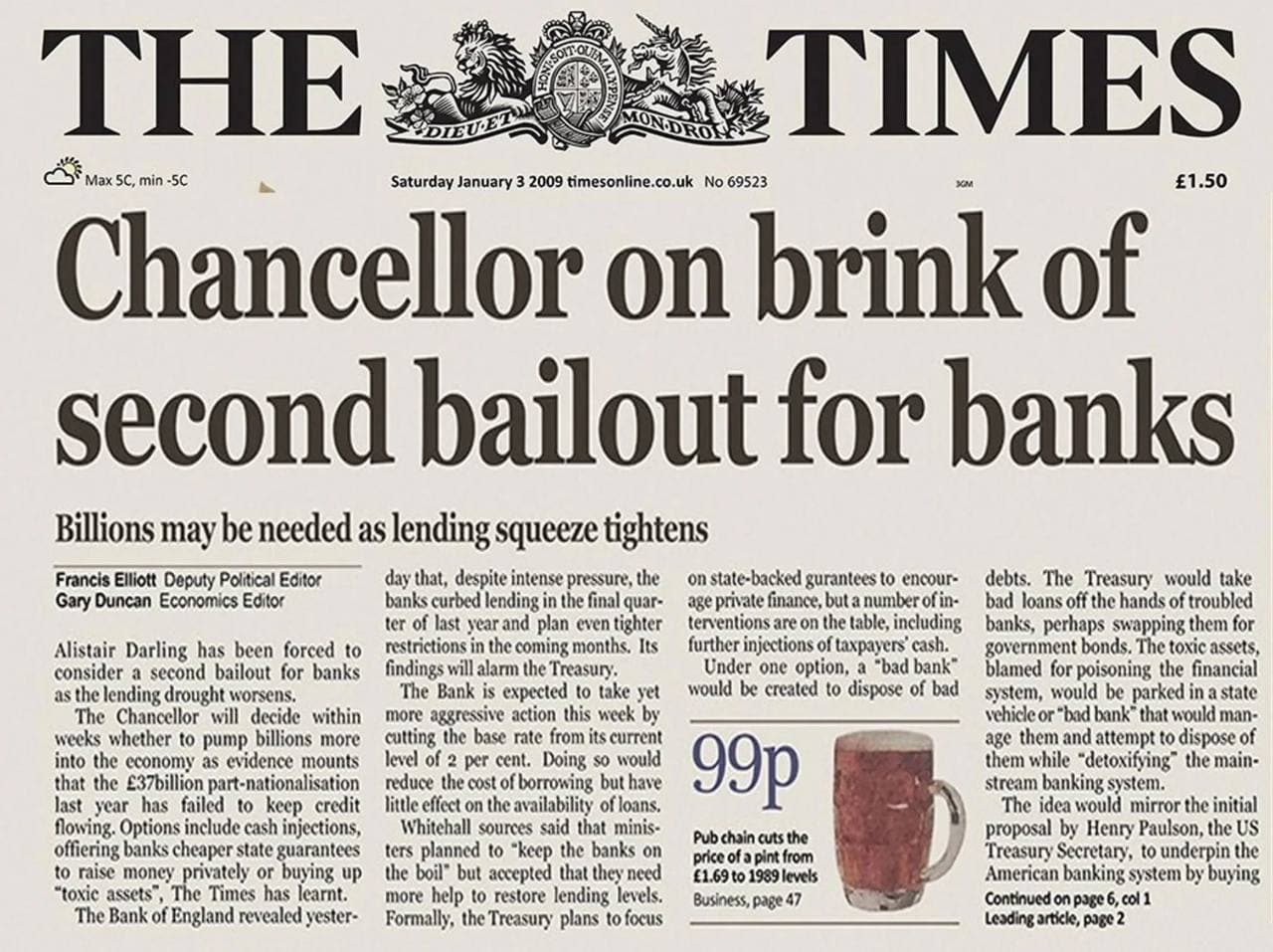
El 3 de enero de 2009—solo meses después de lo peor de la crisis—una persona (o grupo) misteriosa usando el nombre Satoshi Nakamoto lanzó Bitcoin. Incrustado en el primer bloque (el bloque génesis) había un mensaje:
"The Times 03/Jan/2009 Chancellor on brink of second bailout for banks"
Eso no fue aleatorio. Era un titular de The Times de ese día. Una marca temporal demostrando cuándo empezó Bitcoin, y un dedo medio al sistema que acababa de fallarle a todos.
La idea de Satoshi, plasmada en el whitepaper de Bitcoin, era simple pero radical: ¿y si pudiéramos tener dinero que ningún banco, ningún gobierno y ninguna institución pudiera controlar? Dinero que sigue reglas escritas en código, no reglas escritas por políticos. Dinero que no puede ser inflado, congelado o confiscado.
Eso es Bitcoin. Eso fue lo que empezó todo esto.
Qué significa realmente "descentralización"
Probablemente has escuchado la palabra "descentralizado" en conversaciones sobre crypto. Suena técnico, pero el concepto es súper simple.
Piensa en cómo funciona tu banco ahora mismo. Hay una empresa—tu banco—que lleva un registro de cuánto dinero tienes. Cuando envías dinero a alguien, el banco actualiza sus registros: resta de tu cuenta, suma a la de ellos. El banco es la única fuente de verdad. Si el banco dice que tienes 500€, tienes 500€. Si el banco dice que tienes 0€, buena suerte discutiéndolo.
Eso es un sistema centralizado. Una entidad a cargo. Un punto de control. Un punto de fallo.
Ahora imagina que en vez de un banco llevando los registros, miles de ordenadores alrededor del mundo llevan los mismos registros simultáneamente. Cuando envías dinero, todos esos ordenadores verifican y registran la transacción. Ningún ordenador está a cargo. Ninguna entidad puede cambiar los registros. Nadie puede congelar tu cuenta porque no hay ningún "gestor de cuenta" al que llamar.
Eso es descentralización. En lugar de confiar en una institución, confías en las matemáticas y en una red de miles de participantes independientes que se mantienen honestos unos a otros.
- Centralizado: Una empresa controla todo → banco, PayPal, Bizum
- Descentralizado: Miles de participantes comparten el control → Bitcoin, Ethereum
- La diferencia: En un sistema centralizado, necesitas permiso. En uno descentralizado, no.
El problema de la confianza (y por qué "sin confianza" es algo bueno)
Aquí hay una palabra que confunde a todo el mundo al principio: a la gente de crypto le encanta decir que el sistema es "trustless" (sin confianza). Suena mal, ¿verdad? ¿Quién quiere un sistema sin confianza?
Pero "trustless" no significa "no confiable." Significa que no tienes que confiar en nadie para que el sistema funcione.
Piensa en comprar algo en Wallapop a un desconocido. No confías en él. Él no confía en ti. ¿Qué haces? Quedas en un lugar público, inspeccionas el artículo, entregas el dinero, y ambos se van. La transacción funciona a pesar de la falta de confianza porque has creado condiciones donde ninguna de las partes puede estafar fácilmente a la otra.
Las finanzas tradicionales funcionan con confianza:
- Confías en que tu banco guarde tu dinero
- Confías en que el gobierno no inflará tu moneda hasta que no valga nada
- Confías en que los procesadores de pago no bloquearán tus transacciones
- Confías en que las reglas no cambiarán después de que ya hayas empezado a jugar
La crypto reemplaza la confianza con verificación. Las reglas están escritas en código que cualquiera puede leer. Las transacciones se verifican mediante matemáticas, no por personas. El sistema funciona igual seas un multimillonario o un adolescente con un smartphone.
La idea clave: Cada vez que confías en un intermediario con tu dinero, estás haciendo una apuesta de que actuará en tu interés. La historia demuestra que esa apuesta no siempre sale bien.
"Sé tu propio banco" no es solo un eslogan
Cuando la gente de crypto dice "sé tu propio banco", no están siendo provocadores. Están describiendo una capacidad real que importa enormemente para miles de millones de personas.
Considera estos escenarios:
Controles de capital. Eres un ciudadano venezolano viendo cómo tu moneda pierde el 90% de su valor en un año. El gobierno dice que solo puedes cambiar una cantidad mínima de bolívares por dólares. Tus ahorros de toda la vida se evaporan y estás legalmente prohibido de hacer algo al respecto. Con crypto, puedes convertir tu dinero en un activo que ningún gobierno controla.
Los no bancarizados. Hay aproximadamente 1.400 millones de adultos en este planeta que no tienen cuenta bancaria. No porque no quieran una—porque los bancos no los quieren a ellos. No son lo suficientemente rentables, viven en el país equivocado, no tienen la documentación correcta. Pero la mayoría tiene un smartphone. Y un smartphone es todo lo que necesitas para usar crypto.
Remesas. Un trabajador de la construcción en Dubái envía dinero a su familia en Filipinas. Servicios tradicionales como Western Union cobran un 5-10%. La transferencia tarda 3-5 días. Con crypto, llega en minutos y cuesta unos céntimos. Esa diferencia—ese porcentaje que se lleva el intermediario—es comida en la mesa de sus hijos.
Resistencia a la censura. Activistas en países autoritarios necesitan financiar sus operaciones. Periodistas necesitan recibir pagos sin que su gobierno lo sepa. Disidentes necesitan mover dinero a través de fronteras. La banca tradicional hace esto casi imposible cuando el gobierno controla los bancos.
Esto no es teórico. Son problemas reales que afectan a personas reales ahora mismo. La crypto no los resuelve todos perfectamente (aún), pero ofrece algo que no existía antes: un sistema financiero que no requiere el permiso de nadie para participar.
Entonces, ¿por qué debería importarte?
Quizás no vives en Venezuela. Quizás tienes una cuenta bancaria perfectamente funcional. Quizás el sistema financiero actual te funciona bien.
He aquí por qué deberías prestar atención:
Internet tuvo los mismos escépticos. A mediados de los 90, un montón de gente inteligente dijo que internet era una moda para frikis. Tenían teléfonos y fax—¿para qué iban a necesitar email? Avanza 30 años e intenta vivir un solo día sin internet. La crypto está en ese mismo punto de inflexión.
Tu dinero está perdiendo valor ahora mismo. ¿Esa cuenta de ahorros que paga 0,5% de interés mientras la inflación va al 3-6%? Te estás empobreciendo cada año. El poder adquisitivo del dólar ha caído más del 96% desde 1913. El sistema está diseñado para erosionar lentamente el valor de tus ahorros porque incentiva el gasto y el endeudamiento—lo cual es genial para la economía, no tanto para tu futuro.
La infraestructura financiera muestra su edad. Estamos en 2026. Puedes hacer streaming de vídeo 4K a tu teléfono en tiempo real, pero enviar dinero internacionalmente sigue tardando 3-5 días laborables y cuesta una fortuna. Las transferencias bancarias fallan los fines de semana. Las devoluciones de cargo de tarjetas de crédito tardan meses. La infraestructura de pagos sobre la que funciona la mayor parte del mundo fue diseñada en los años 70 y se nota.
Entender crypto es entender el futuro del dinero. Ya sea que la crypto reemplace completamente las finanzas tradicionales (improbable) o se convierta en un componente importante de ellas (muy probable), entender cómo funciona te da una ventaja. Es alfabetización financiera para el siglo XXI.
Mi opinión: No necesitas apostar todo a la crypto. No necesitas convertirte en un maximalista de Bitcoin ni poner los ahorros de tu vida en tokens. Pero ¿entender cómo funciona esta tecnología y por qué existe? Eso ya no es opcional. Es como entender cómo funciona internet en el año 2000—la gente que lo pilló temprano tuvo una ventaja masiva.
El panorama general
Hagamos zoom out y resumamos lo que hemos cubierto:
- El dinero es una tecnología, y como toda tecnología, evoluciona. Pasamos de conchas a oro, de papel a digital, y de digital a crypto.
- El sistema actual requiere confianza en gobiernos, bancos e instituciones. Esa confianza se ha roto repetidamente.
- La crisis de 2008 fue el catalizador. Bitcoin nació como respuesta directa al fallo institucional.
- Descentralización significa que ninguna entidad controla el sistema. Miles de participantes comparten la responsabilidad.
- "Sin confianza" es una característica, no un defecto. No necesitas confiar en nadie porque las reglas se aplican mediante código y matemáticas.
- "Sé tu propio banco" importa para miles de millones de personas desatendidas, censuradas o explotadas por las finanzas tradicionales.
- Esto te afecta aunque creas que no. Entender crypto es entender el futuro del dinero.
Nada de esto significa que la crypto sea perfecta. Tiene problemas reales—estafas, volatilidad, preocupaciones medioambientales, complejidad. Cubriremos todo eso honestamente a lo largo de esta serie. Pero entender por qué existe es la base sobre la que se construye todo lo demás.
El sistema financiero no estaba roto para todos. Pero estaba roto para suficientes personas como para que alguien decidiera construir una alternativa. Y esa alternativa se convirtió en un ecosistema de varios billones de dólares que está redefiniendo cómo el mundo piensa sobre el dinero.
Qué viene después
Ahora que entiendes por qué existe la crypto, es hora de entender cómo empezó. En Parte 2: Bitcoin — El que lo empezó todo, nos sumergiremos en cómo funciona realmente Bitcoin. Desmitificaremos la minería, explicaremos qué es realmente la blockchain (pista: es solo una hoja de cálculo sofisticada), y entenderemos por qué una moneda sin CEO, sin sede y sin empleados vale más de un billón de dólares.
No se requiere título en matemáticas. Solo trae curiosidad.
Stay Updated
Get notified about new posts on automation, productivity tips, indie hacking, and web3.
No spam, ever. Unsubscribe anytime.