Part 5 of 10
You've built custom commands. They're great for workflows you trigger explicitly—/review, /commit, /deploy. But what about knowledge Claude should apply automatically without you having to remember to invoke it?
That's what Skills do. They're specialized knowledge modules that Claude discovers and loads when relevant, not when you explicitly call them. Think of Commands as tools you pick up; Skills are expertise Claude develops.
Commands vs Skills: What's the Difference?
The distinction matters because it changes how you structure your automation.
Slash Commands (from Part 4):
- You invoke them explicitly:
/review,/commit - Loaded immediately when you call them
- Great for workflows you want to trigger intentionally
- Simple markdown files with optional frontmatter
Skills:
- Claude invokes them automatically when your request matches
- Lazy-loaded—only the description is read at startup, full content loads on use
- Great for standards, patterns, and specialized knowledge Claude should always apply
- Can bundle supporting files, examples, and executable scripts
Here's the mental model: Commands are verbs (things you do), Skills are expertise (things Claude knows).
When you say "review this PR," you might want Claude to:
- Run your
/reviewcommand (explicit action) - Apply your team's code review standards from a Skill (automatic knowledge)
Both have their place.
How Skills Actually Work
The magic of Skills is progressive disclosure. Here's the flow:
At startup: Claude reads only the name and description from each Skill's SKILL.md file. Minimal overhead.
When you make a request: Claude matches your request against Skill descriptions. If there's a match, it asks: "I found a Skill that might help. Want me to use it?"
On confirmation: The full SKILL.md content loads into context. Supporting files load only if Claude needs them during execution.
This means you can have dozens of Skills without performance penalty. They're loaded on-demand, not upfront.
Tip: Write Skill descriptions with keywords users would naturally say. "Helps with documents" won't trigger. "Review pull requests using OWASP security guidelines and team formatting standards" will.
Skill File Structure
Skills live in directories with a required SKILL.md file:
.claude/skills/└── code-review/├── SKILL.md # Required - instructions and frontmatter├── examples/ # Optional - example outputs│ ├── good-review.md│ └── bad-review.md├── templates/ # Optional - output templates│ └── review-template.md└── scripts/ # Optional - executable helpers└── lint-check.sh
Key constraints:
SKILL.mdis required (case-sensitive filename)- Keep SKILL.md under 500 lines for optimal performance
- Supporting files are discovered via links in SKILL.md
- Scripts execute without loading their source into context—only output consumes tokens
Where Skills Live
Skills follow a hierarchy—higher levels override lower:
Enterprise — Managed settings for all users in organization (highest priority)
Personal — ~/.claude/skills/ — Your Skills, available across all projects
Project — .claude/skills/ — Team Skills, checked into git
Plugin — skills/ inside plugin directory — Available to anyone with the plugin installed
The split is similar to Commands: personal Skills follow you everywhere, project Skills are shared with your team.
The SKILL.md Template
Here's the anatomy of a well-structured Skill:
---Name: code-reviewDescription: "Review pull requests using OWASP security guidelines, performance best practices, and team formatting standards"Allowed-tools: Read, Grep, GlobModel: claude-sonnet-4-5-20250929---# Code Review Standards## PurposeApply consistent code review standards across all PRs.## When to Use- Reviewing pull requests- Checking code for security issues- Validating against team conventions## Instructions### Security Checks1. SQL injection vulnerabilities2. XSS attack vectors3. Authentication bypasses4. Sensitive data exposure### Performance Checks1. N+1 query patterns2. Unnecessary re-renders3. Memory leaks4. Blocking operations### Style Checks1. Naming conventions per team standards2. Function length (max 50 lines)3. Cyclomatic complexity## Output FormatOrganize findings by severity:- 🚨 Critical (blocks merge)- ⚠️ Warnings (should fix)- 💡 Suggestions (nice to have)## ExamplesSee ./examples/good-review.md for proper format.
Frontmatter Options
Skills support powerful configuration through YAML frontmatter:
name (required) — Skill identifier. Lowercase, numbers, hyphens only. Max 64 characters.
description (required) — What it does and when to use it. Max 1024 characters. This is how Claude matches requests to Skills—make it descriptive.
allowed-tools — Tools Claude can use without permission prompts when this Skill is active. Comma-separated or YAML list.
model — Override the model when this Skill runs. Useful for complex reasoning tasks.
context — Set to fork to run in an isolated sub-agent context with separate conversation history.
agent — Agent type when context: fork is set. Options: Explore, Plan, general-purpose, or custom.
hooks — Define Skill-scoped hooks: PreToolUse, PostToolUse, Stop.
user-invocable — Set to false to hide from the / menu while still allowing auto-discovery.
disable-model-invocation — Set to true to prevent Claude from programmatically invoking (but still visible in menu).
Creating Your First Skill
Let's build a practical Skill: a TDD (Test-Driven Development) guide that Claude applies automatically when you're writing tests.
Step 1: Create the Directory
Mkdir -p .claude/skills/tdd
Step 2: Create SKILL.md
Cat > .claude/skills/tdd/SKILL.md << 'EOF'---Name: tddDescription: "Apply test-driven development workflow when writing tests, implementing features with tests, or following red-green-refactor cycle"Allowed-tools: Read, Write, Edit, Bash(npm test:*), Bash(bun test:*)---# Test-Driven Development## PurposeGuide development through proper TDD: Red → Green → Refactor.## When to Use- When user asks to "add a feature with tests"- When user mentions "TDD" or "test-driven"- When creating new functionality that requires tests- When user asks to implement something "the right way"## The TDD Cycle### Phase 1: Red (Write Failing Test)1. Understand the requirement fully2. Write the simplest test that fails3. Verify the test fails for the RIGHT reason4. DO NOT write implementation yet### Phase 2: Green (Make It Pass)1. Write minimal code to pass the test2. No extra features, no edge cases yet3. Ugly code is acceptable—just make it green### Phase 3: Refactor (Clean Up)1. Improve code quality2. Remove duplication3. Better naming4. Tests MUST stay green### RepeatFor each new behavior, start the cycle again.## Anti-Patterns to Avoid- Writing implementation before tests- Writing multiple tests at once- Refactoring while tests are red- Skipping the refactor phase## Example SessionSee ./examples/tdd-session.md for a complete walkthrough.EOF
Step 3: Add an Example
Mkdir -p .claude/skills/tdd/examplesCat > .claude/skills/tdd/examples/tdd-session.md << 'EOF'# TDD Session: Adding Email Validation## RequirementValidate email format in user registration.## Cycle 1: Basic Validation### Red```typescript// user.test.tsIt('should reject invalid email format', () => {expect(() => new User('notanemail')).toThrow('Invalid email');});```Run: `npm test` → FAILS (User doesn't validate emails yet)### Green```typescript// user.tsConstructor(email: string) {if (!email.includes('@')) {throw new Error('Invalid email');}this.email = email;}```Run: `npm test` → PASSES### RefactorExtract validation:```typescriptPrivate validateEmail(email: string): void {if (!email.includes('@')) {throw new Error('Invalid email');}}```## Cycle 2: Domain Validation### Red```typescriptIt('should reject email without domain', () => {expect(() => new User('test@')).toThrow('Invalid email');});```...continue cycle...EOF
Step 4: Use It
Now when you say "let's add email validation with proper testing," Claude will:
- Recognize this matches the TDD Skill description
- Ask if you want to use the TDD Skill
- Follow the Red → Green → Refactor cycle automatically
The Superpowers Collection
The most popular Skills library is obra/superpowers with 16.5k+ stars. It's battle-tested and covers common development workflows.
Installation
/plugin marketplace add obra/superpowers-marketplace/plugin install superpowers@superpowers-marketplace
Or clone directly:
Git clone https://github.com/obra/superpowers.git ~/.claude/skills/superpowers
Note: Skills use directory namespacing similar to how commands are organized in Part 4. The same organizational patterns apply—subdirectories create namespaces for better organization.
Key Skills Included
/superpowers:brainstorm — Structured ideation before starting complex features. Use this before jumping into code.
/superpowers:write-plan — Create implementation plans for migrations or multi-file refactors.
/superpowers:execute-plan — Run plans in controlled batches with checkpoints.
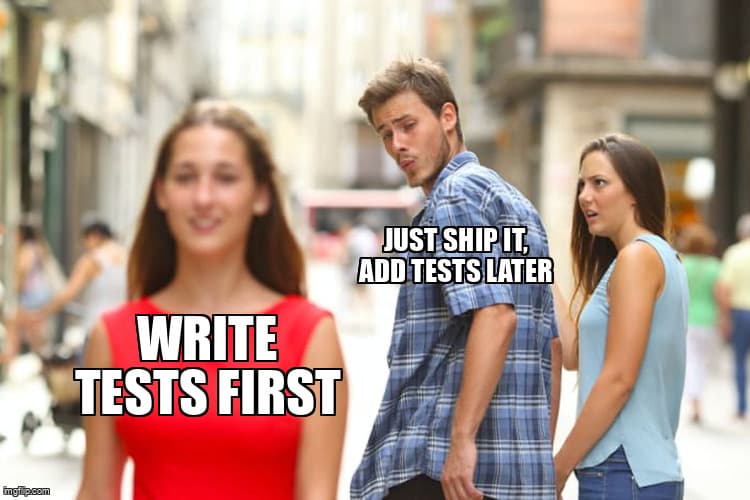
/superpowers:tdd — Test-driven development with the full Red/Green/Refactor cycle.
/superpowers:debug — Systematic debugging with root cause tracing.
Why It Works
Superpowers isn't just prompts—it's production-proven patterns. The TDD Skill, for example, includes:
- Anti-pattern detection (writing tests after code)
- Async testing patterns
- Proper assertion structure
- Refactoring triggers
These patterns come from real-world usage across thousands of developers.
Practical Skill Ideas
Here are Skills worth building for your team:
API Documentation — Automatically apply your API documentation standards when Claude writes or updates endpoints.
Error Handling — Enforce consistent error handling patterns (your ApiError class, logging format, user-facing messages).
Database Patterns — Apply your team's conventions for queries, transactions, migrations.
Security Review — Automatically check for OWASP Top 10 issues when reviewing code.
Component Patterns — Enforce your React/Vue/Svelte component structure and naming.
Commit Messages — Apply conventional commit format automatically.
Skills + Scripts: The Power Combo
Here's something underutilized: Skills can bundle executable scripts that run without loading their source into context.
.claude/skills/security-audit/├── SKILL.md└── scripts/├── check-dependencies.sh├── scan-secrets.py└── validate-permissions.js
In your SKILL.md:
## Available ScriptsRun these for automated checks:- `./scripts/check-dependencies.sh` - Scan for vulnerable packages- `./scripts/scan-secrets.py` - Find hardcoded secrets- `./scripts/validate-permissions.js` - Check file permissions
Claude can execute these scripts, but only the output consumes context—not the script source. This is perfect for complex validation logic that's more reliable as tested code than LLM-generated commands.
Skills vs Commands: When to Use Each
Use Commands when:
- You want explicit control over when something runs
- The workflow is user-initiated (deploy, commit, generate)
- You need argument passing (
$ARGUMENTS,$1,$2) - The action is discrete and standalone
Use Skills when:
- Knowledge should apply automatically based on context
- You want consistent standards without remembering to invoke them
- The expertise spans multiple types of requests
- You're encoding team knowledge Claude should always have
Use both together:
/reviewcommand triggers the reviewcode-reviewSkill provides the standards to apply
Skill Availability
Skills require a paid plan:
- Pro, Max, Team, Enterprise — Full Skills support
- Free tier — No Skills
If you're on a free plan and want to encode team knowledge, use the .claude/rules/ directory from Part 3 instead. Rules are always loaded; Skills are lazy-loaded.
Discovering Skills
GitHub Topics:
Https://github.com/topics/claude-skills
Community Collections:
- obra/superpowers — Core development patterns
- obra/superpowers-skills — Community-contributed Skills
- SkillsMP — Marketplace for Claude/ChatGPT Skills
The Agent Skills Specification — Released December 2025 as an open standard. OpenAI adopted the same format for Codex CLI and ChatGPT, so Skills you build for Claude work across tools.
What's Next
Skills give Claude specialized knowledge that activates automatically. But what if you need Claude to do multiple things simultaneously? What if one task could benefit from parallel execution?
That's where Subagents come in. In Part 6: Subagents, we'll explore how to spawn specialized agents that work in parallel—running tests while generating documentation while checking for security issues, all at once.
File locations
~/.claude/skills/name/SKILL.md — Personal (all projects)
.claude/skills/name/SKILL.md — Project (team)
Required structure
skill-name/SKILL.md — Required
examples/, templates/, scripts/ — Optional
Frontmatter
Name — Skill identifier
Description — When to use (be specific)
Allowed-tools — e.g., Read, Write, Bash(npm *)
Model — Override model
Install superpowers
git clone https://github.com/obra/superpowers.git ~/.claude/skills/superpowers
Stay Updated
Get notified about new posts on automation, productivity tips, indie hacking, and web3.
No spam, ever. Unsubscribe anytime.