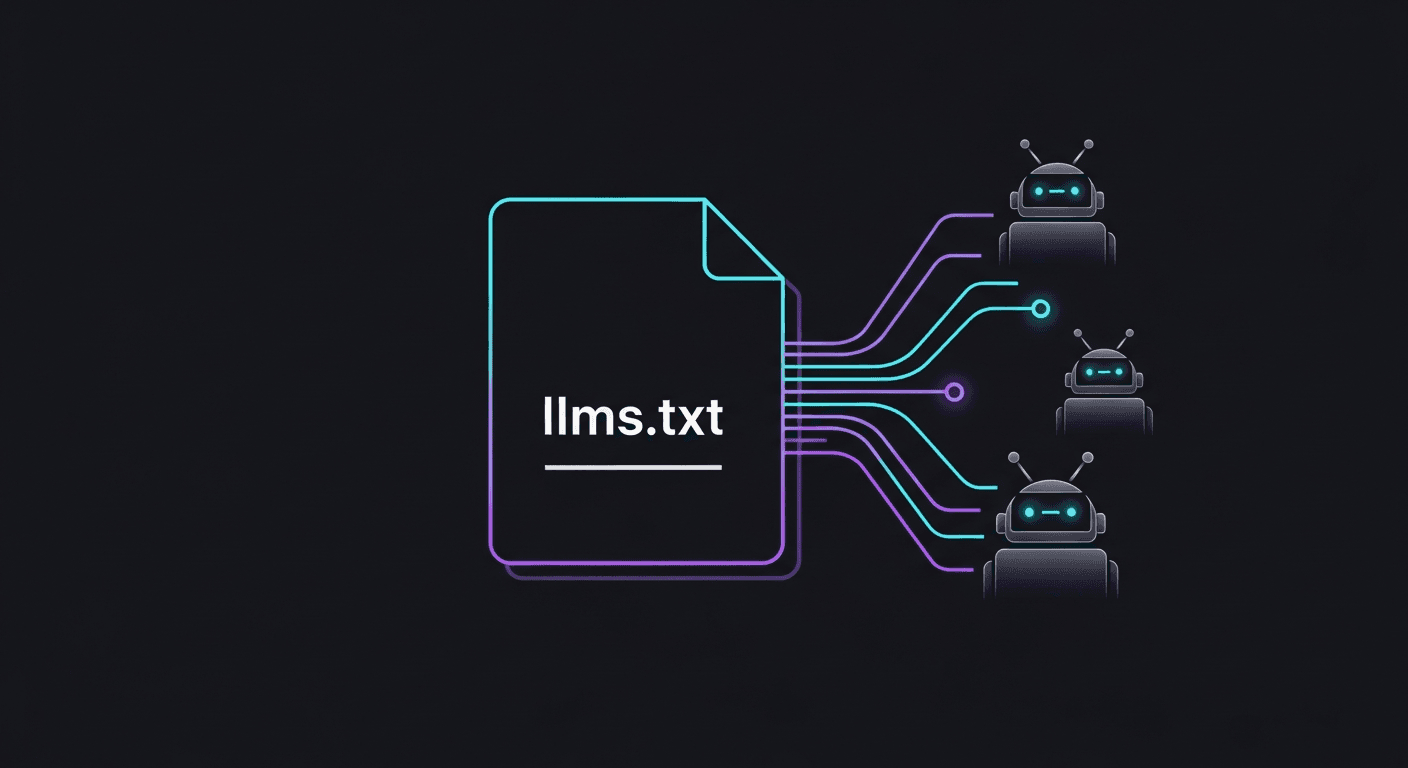
如果你最近关注 AI 领域,大概已经听说过 llms.txt。你可以把它想象成 robots.txt,但专门面向 LLM(大语言模型)
它解决什么问题
LLM 有一个根本性的问题:上下文窗口(context window)。它们一次只能处理这么多文本。当 AI 试图理解你的网站时,会遇到几个问题:
- HTML 太乱了 — 导航、广告、脚本和实际内容全混在一起
- 网站体量太大 — 大多数站点有几百个页面
- 结构千差万别 — 每个网站的做法都不一样
把一个复杂的网站转换成 LLM 真正能用的格式,是很难的事。这就是 llms.txt 存在的意义
什么是 llms.txt?
Jeremy Howard(Answer.AI 联合创始人)在 2024 年 9 月提出了这个规范。它本质上是一个放在网站根目录的 markdown 文件,提供:
- 网站的简要概述
- 每个板块是关于什么的
- 指向重要内容的链接及描述
- 帮助 AI 理解你提供什么的上下文
它是一个专门为机器打造的精选索引
格式
就是纯 markdown。基本结构如下:
# Site Name> Brief tagline or description## AboutA paragraph explaining what this site is and who it's for.## Site Structure- Homepage: / - What visitors find here- Documentation: /docs - Technical guides and API references- Blog: /blog - Articles and updates## Key Pages- [Getting Started](/docs/getting-started) - First steps for new users- [API Reference](/docs/api) - Complete API documentation## Contact- Email: hello@example.com- GitHub: github.com/example
实际案例
以下是我在自己网站上用的:
# Jo Vinkenroye - Web Application Developer> Building ERP systems, SaaS platforms, and modern web applications## AboutSenior developer with 13+ years of experience specializing inReact, Next.js, blockchain development, and AI integration.## Site Structure- Homepage: / - Overview of skills, experience, and projects- Experience: /experience - Detailed work history- Blog: /blog - Technical articles and project write-ups## Blog Posts- Building a Tamagotchi on Garmin: /blog/garmigotchi- Ad-Forge - AI-Powered Ad Generation: /blog/ad-forge
你应该添加一个吗?
说实话:目前还没有主要的 AI 公司正式声明他们在爬取时使用 llms.txt。这是一个提案标准,不是已采纳的标准
但采用率在增长。Anthropic、Cloudflare、Vercel、Cursor——都已经实现了。Mintlify 在 2024 年底把它推广到了所有托管文档
适合添加的情况:
- 你有文档或技术内容
- 你想在可能重要的事情上抢先一步
- 你在为 AI 原生的内容发现做准备
- 10 分钟搞定,零成本
可以跳过的情况:
- 你的网站主要是视觉内容
- 你在等正式的广泛采纳
在 Next.js 中实现
如果你用的是 Next.js App Router,可以创建一个动态路由:
// app/llms.txt/route.tsExport async function GET() {const content = `# Your Site Name> Your tagline here## AboutYour description...## Key Pages- Homepage: / - Main landing page- Blog: /blog - Articles and guides`;return new Response(content, {headers: {'Content-Type': 'text/plain; charset=utf-8',},});}
对于博客文章等动态内容,你可以用代码自动生成:
// app/llms.txt/route.tsImport { getAllPosts } from '@/lib/blog';Export async function GET() {const posts = getAllPosts();const blogSection = posts.map(post => `- ${post.title}: /blog/${post.slug}`).join('\n');const content = `# My Site## Blog Posts${blogSection}`;return new Response(content, {headers: { 'Content-Type': 'text/plain; charset=utf-8' },});}
工具和资源
一些可以帮你搞定这件事的工具:
- llms_txt2ctx — 用于解析和生成上下文的命令行工具
- vitepress-plugin-llms — VitePress 集成
- docusaurus-plugin-llms — Docusaurus 集成
- GitBook — 为所有托管文档自动生成
更大的图景
不管 llms.txt 最终是否成为通用标准,它要解决的问题不会消失。AI 模型会持续需要对网页内容的结构化访问
通过现在就实现它,你在:
- 让你的内容对当前的 AI 工具更易获取
- 为未来可能的广泛采纳做准备
- 从 AI 优先的角度思考内容
最后一点可能是最有价值的。随着 AI 成为人们发现内容的主要方式,机器可读性变得和人类可读性一样重要
结论
llms.txt 简单、低成本,但随着 AI 原生发现的增长,回报可能很可观。几分钟就能实现,同时向外界表明你的网站已经为 AI 优先的互联网做好了准备
查看官方规范了解更多细节,或者看看 Anthropic 和 Vercel 是怎么做的
Stay Updated
Get notified about new posts on automation, productivity tips, indie hacking, and web3.
No spam, ever. Unsubscribe anytime.